PSHE and RSHE
PSHE (Personal, Social, Health and Economic Education) is a school subject that helps children and young people develop the knowledge, skills, and values they need to lead safe, healthy, and fulfilling lives.
What is PSHE?
- Personal: Understanding emotions, building self-esteem, and developing resilience.
- Social: Learning about relationships, respect, and teamwork.
- Health: Exploring physical and mental health, healthy lifestyles, and safety.
- Economic: Gaining financial awareness, understanding money, and preparing for the world of work.
Why is PSHE important?
- Helps children make informed choices and understand consequences
- Supports mental wellbeing and emotional development.
- Prepares them for challenges in life, including peer pressure, online safety, and future careers.
- Encourages respect, tolerance, and empathy in a diverse society.
In line with the latest Department for Education guidance (2025), primary schools must teach:
Relationships Education
- Building friendships and respectful relationships
- Understanding families and different types of relationships
- Recognising emotions and learning how to manage them
- Staying safe online and offline
- Knowing how and when to ask for help
Health Education
- Healthy eating, exercise, and hygiene
- Mental wellbeing and resilience
- Basic first aid and personal safety
- Understanding changes in the body (including puberty
Economic Wellbeing & Citizenship (non-statutory but widely taught)
- Learning about money and making choices
- Understanding rules, responsibilities, and communities
- Exploring jobs and aspirations for the future
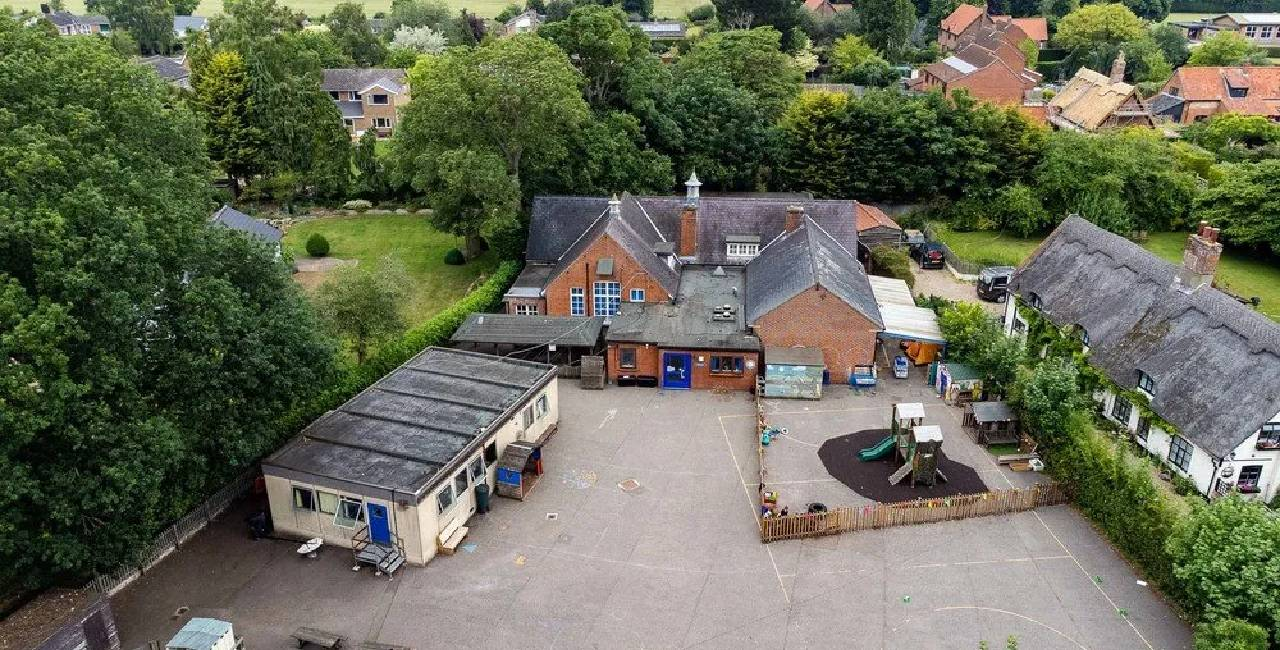
PSHE at Brooke
At Brooke we follow the Jigsaw scheme of learning.
Jigsaw is a whole-school approach and embodies a positive philosophy and creative teaching and learning activities to nurture children’s development as compassionate and well-rounded human beings as well as building their capacity to learn.
Jigsaw is a comprehensive and completely original PSHE Education programme (lesson plans and teaching resources) for the whole primary school from ages 3-11.
Jigsaw is structured into six themed units (called Puzzles) taught across the school year:
1. Being Me in My World
- Understanding self-identity and belonging
- Learning about rights, responsibilities, and school values
- Building self-esteem and empathy
2. Celebrating Difference
- Exploring diversity and respecting differences
- Challenging bullying and stereotypes
- Promoting inclusion and kindness
3. Dreams and Goals
- Setting personal goals and aspirations
- Learning about perseverance and teamwork
- Celebrating achievements
4. Healthy Me
- Understanding physical and mental health
- Learning about nutrition, exercise, and sleep
- Exploring safety, risk, and substance awareness
5. Relationships
- Building positive friendships and family relationships
- Recognising healthy vs. unhealthy behaviours
- Learning about trust, conflict resolution, and communication
6. Changing Me
- Understanding the human life cycle and body changes
- Learning about puberty in a sensitive, age-appropriate way
- Preparing for transition to secondary school
In addition to Jigsaw lessons, we also have our 'core PSHE lessons' that are taught twice a year. These cover topics such as 5 trusted adults, Zones of Regulation, PANTS and E-safety.
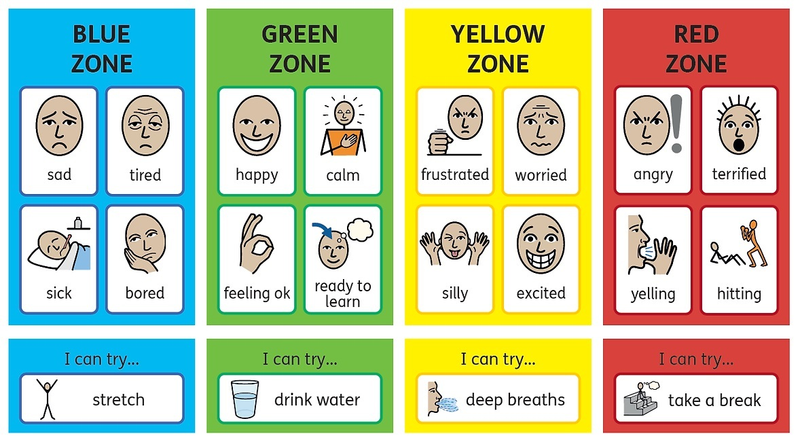
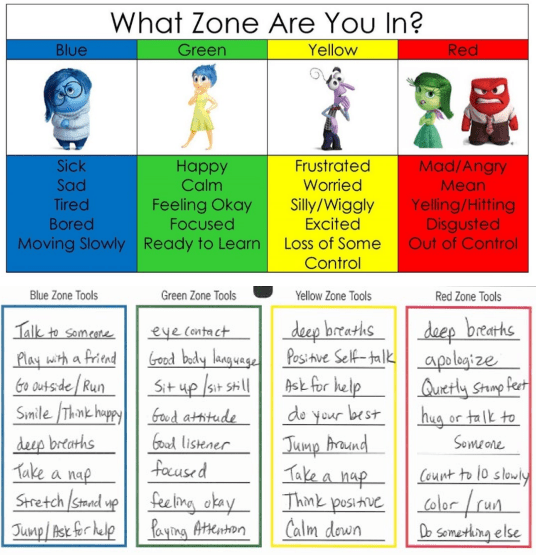
The Zones of Regulation
The Zones of Regulation is a framework that helps children recognize and manage their emotions, energy, and attention so they can be more successful at school and home.
-
The Four Zones
-
Blue Zone: Low states of alertness (sad, tired, bored, sick).
-
Green Zone: Calm, focused, ready to learn (happy, relaxed, content).
-
Yellow Zone: Heightened alertness, but still in control (worried, excited, silly, frustrated).
-
Red Zone: Extremely heightened states of alertness and intense emotions (anger, panic, loss of control).
-
-
How It Works
-
The Zones give children a simple way to talk about how they feel.
-
Once they can identify their zone, they can learn strategies (deep breathing, taking a break, moving their body, talking it out) to manage their feelings and return to the Green Zone when needed.
-
It’s not about labelling feelings as “good” or “bad” – all feelings are normal. The goal is to recognize emotions and use tools to regulate them.
-
-
How Parents Can Help
-
Use the same language at home (“Which Zone are you in right now?”).
-
Normalize all zones by acknowledging that everyone experiences them.
-
Encourage and practice strategies together. For example: “I see you’re in the Yellow Zone—would a walk help you get back to Green?”
-
Model your own self-regulation by sharing your feelings and how you manage them.
-